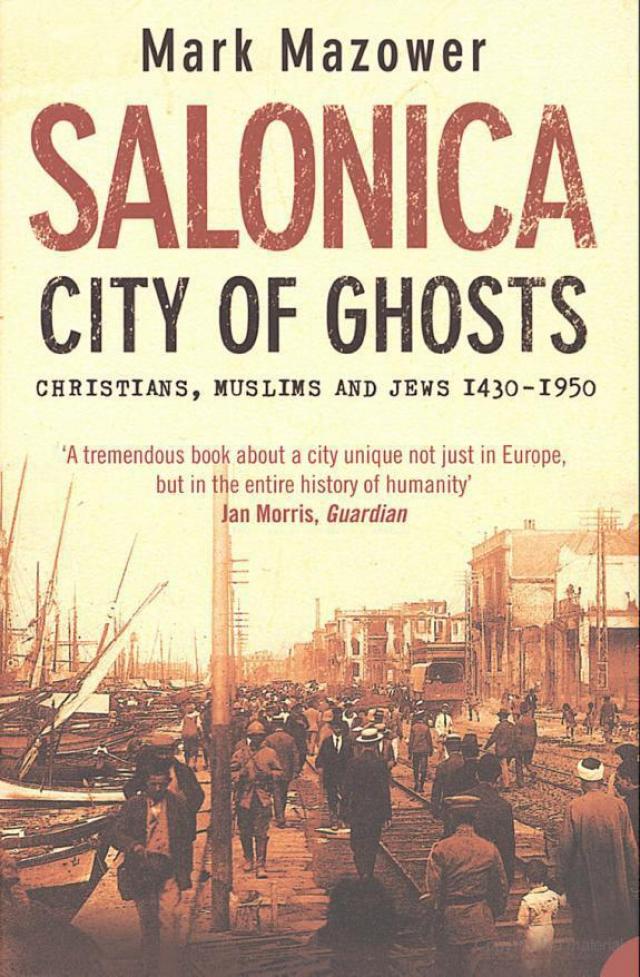
Salonica, located in northern Greece, was long a fascinating crossroads metropolis of different religions and ethnicities, where Egyptian merchants, Spanish Jews, Orthodox Greeks, Sufi dervishes, and Albanian brigands all rubbed shoulders. Tensions sometimes flared, but tolerance largely prevailed until the twentieth century when the Greek army marched in, Muslims were forced out, and the Nazis deported and killed the Jews. As the acclaimed historian Mark Mazower follows the city’s inhabitants through plague, invasion, famine, and the disastrous twentieth century, he resurrects a fascinating and vanished world.From Publishers WeeklyStarred Review. Situated on the Aegean where two mountain ranges meet, Salonica has a unique geographical location, which promoted the rich confluence of cultures that once characterized the city. Part travelogue, part history and part cultural study, this is a splendid tour of the fortunes and misfortunes of this Balkan city. Drawing on a wealth of archival documents, Mazower (The Balkans; Dark Continent) weaves a lavish tapestry illustrating the tangled history of Salonica, which began as a Hellenistic urban center in 315 B.C. and flourished through the Middle Ages as a Greek Orthodox city. In 1430, the Ottoman Empire commenced a rule that lasted until 1912. By the end of the 15th century, Salonica had a large influx of Jews who had fled persecution in Spain. Mazower eloquently points out that these "peoples of the Book" largely tolerated and learned from one another, even though rivalry sometimes erupted into street fights, civil wars and power struggles. A series of civil wars in the 19th century returned the city to the Greeks, and the fall of the Ottoman Empire after WWI turned Salonica into a European city. In addition, the impact of the work of 19th-century Christian missionaries, along with the Nazis' removal of Jews, left Salonica bereft of its rich religious pluralism and multiethnic heritage. Mazower's graceful, evocative prose, his deft attention to details and his empathetic presentation of all sides of the story add up to a magnificent tale of this unique city. 32 pages of illus., eight in color; 10 maps. Copyright © Reed Business Information, a division of Reed Elsevier Inc. All rights reserved. From BooklistThe city of Thessaloniki, or Salonica, is a port city in northern Greece that apparently emerged as a polity under the reign of Phillip of Macadon in the fourth century B.C.E. In the Hellenistic and Roman eras, the city became a vibrant, cosmopolitan commercial center sitting astride the trade routes to Africa and Asia. Under the Byzantine Empire, the city was a center of humanistic learning and theological debate, coming under Ottoman control in 1430. Mazower's illuminating and surprising account focuses on the city from the commencement of Ottoman rule to the Nazi occupation. Despite the claims of Greek nationalists, Ottoman rule was relatively benign, as Jews, Christians, and Muslims lived, worked, and often prospered together. When the city reverted to Greek control in 1912, the consensus started to dissolve. Muslims left or were expelled, and resentment against Jews increased. Under the Nazis, Jews, perhaps, 20 percent of the population, were deported en masse to concentration camps. A vivid but ultimately tragic light shed on a vanished urban civilization. Jay FreemanCopyright © American Library Association. All rights reserved
Read online